Abeero Home · Bedding guides
Why Sheets Pill and How to Reduce Damage
Pills are small knots of surface fibers that can develop through friction, wear and laundry agitation. They do not identify one cause or prove a sheet is defective. Inspect the fabric underneath before changing care or removing anything: an intact surface and a thin, torn area need different decisions. Follow the actual label, and do not expect any fabric or brand to be pill-proof.
[1] Maytag · Maytag describes pills as knots of broken fibers and identifies friction, wear and washing/drying agitation as contributors. General textile explanation, not a diagnosis or Abeero Home product test.
Editorial reasoning: A surface ball, a pulled yarn and a fragile base fabric are different observations. Without verified fabric/remover instructions, no specific tool or successful outcome can be promised.
In this guide
Identify what is on the surface
Maytag explains pilling as small knots formed from broken fibers. Everyday rubbing and agitation during washing or drying can contribute. The article also describes differences associated with fiber length and fabric construction; that is a general tendency, not a way to rank every cotton or microfiber sheet. A fiber name alone does not reveal how this particular fabric will wear.
[1] Maytag · Maytag describes pills as knots of broken fibers and identifies friction, wear and washing/drying agitation as contributors. General textile explanation, not a diagnosis or Abeero Home product test.
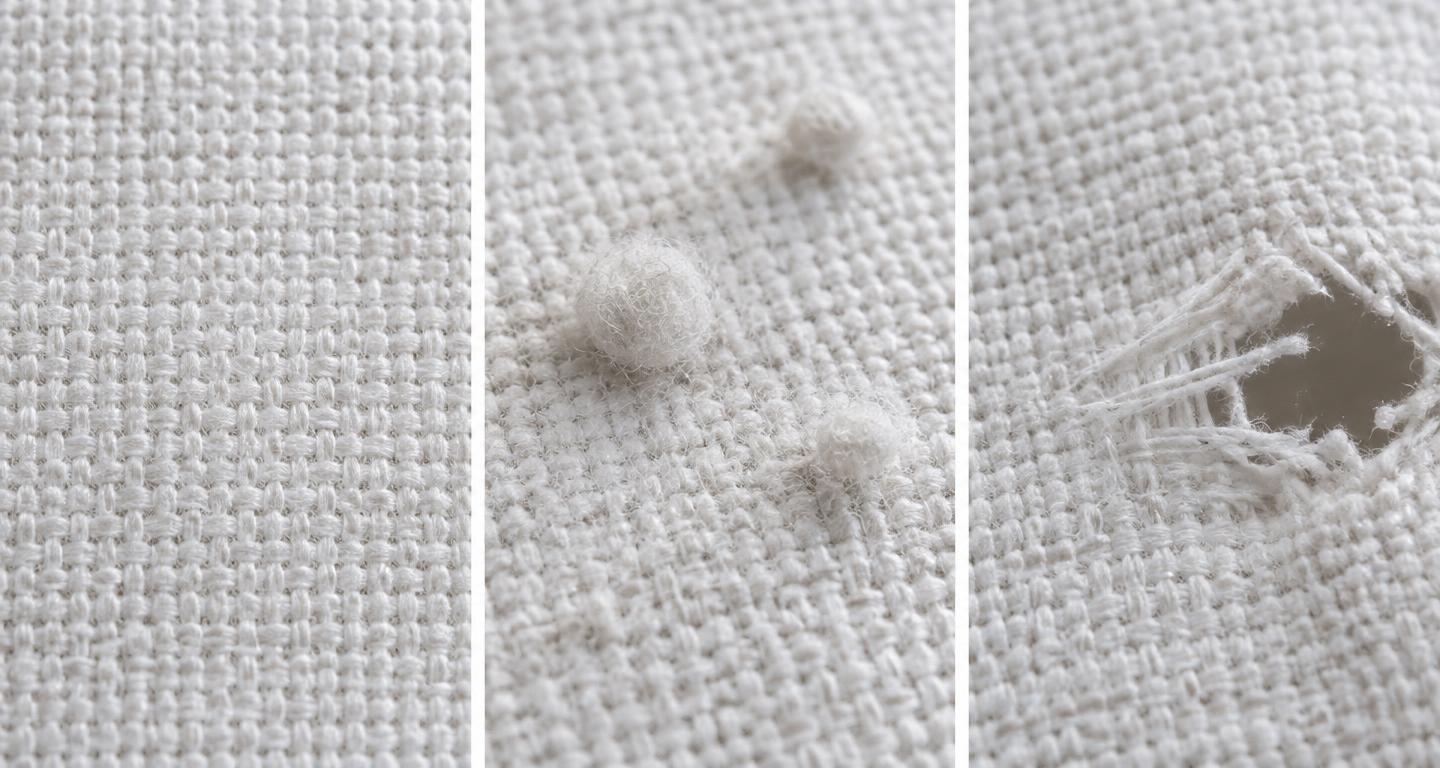
Look in good light without pulling at the sheet. Note whether the raised material is attached to the surface, whether there are long loose yarns, and whether the base looks thin or has holes. Loose lint is not automatically a pill, and an elongated snag is not a license to cut a structural yarn. A photograph can record your observation, but cannot by itself establish fiber composition, remaining strength or the cause.
Editorial reasoning: A surface ball, a pulled yarn and a fragile base fabric are different observations. Without verified fabric/remover instructions, no specific tool or successful outcome can be promised.
Review the laundry process before removing pills
Start with the current care label and the machine manual. Maytag’s top-load HE guidance warns that delicate fabrics can stretch or pill on high-action, long-duration cycles. Where the label and manual permit it, a less aggressive process may be worth trying. Do not translate that into a universal Delicate setting or arbitrarily shorten a cycle that is needed for the load.
[2] Maytag · Maytag warns high-action long cycles may stretch or pill delicate fabrics and advises label-compatible lower action or shorter washing. Top-load HE guidance; not a universal cycle name, duration or permission to underwash all bedding.
Editorial reasoning: A surface ball, a pulled yarn and a fragile base fabric are different observations. Without verified fabric/remover instructions, no specific tool or successful outcome can be promised.
Review what shared the load: rough closures, visibly lint-shedding items and incompatible fabric handling are useful observations to record. Separate unsuitable items rather than relying on matching colors. Check the permitted drying process as carefully as the wash. These are cautious changes to evaluate, not proof that one towel, dryer setting or detergent caused the pilling. Do not add softener or heat solely to make the surface feel smoother if the label prohibits it.
Editorial reasoning: A surface ball, a pulled yarn and a fragile base fabric are different observations. Without verified fabric/remover instructions, no specific tool or successful outcome can be promised.
Use a care-versus-removal decision tree
| Item | Next decision | Limit |
|---|---|---|
| Thin fabric, hole or tear | Avoid abrasive removal; evaluate repair or retirement | Cosmetic improvement cannot restore missing fabric |
| Long snag or loose structural yarn | Stop pulling or cutting; seek suitable repair advice | Not every raised thread is a detachable pill |
| Small balls, base appears intact | Review care; ask supplier about compatible removal | Appearance alone does not prove the base is strong |
| Removal approved for this fabric | Follow both fabric and remover directions on a small inconspicuous area | Stop if snagging, thinning or damage appears |
| Method or condition uncertain | Leave the pills alone pending clarification | No need to risk a usable sheet for a cosmetic change |
Editorial risk-management checklist, not a fabric-strength test or endorsement of a shaver, razor or abrasive pad.
Editorial reasoning: A surface ball, a pulled yarn and a fragile base fabric are different observations. Without verified fabric/remover instructions, no specific tool or successful outcome can be promised.
Cautious removal means checking permission, not simply choosing the gentlest-sounding tool. Do not pull attached balls by force. We do not prescribe a household razor, scraping method or repeated passes: a removal device can affect the fabric beneath. If manufacturer advice allows a method, follow its instructions and stop at the first sign of catching or damage. Removing today’s surface balls also cannot promise they will never return.
Editorial reasoning: A surface ball, a pulled yarn and a fragile base fabric are different observations. Without verified fabric/remover instructions, no specific tool or successful outcome can be promised.
Compare condition, not just appearance
Hypothetical example: A hypothetical pair of observations
- Sheet A:
- Raised balls; no visible hole; care permission known
- Sheet B:
- Raised balls beside a visibly thin, torn area
- For A, review the load and ask about a permitted removal method before trying it.
- For B, skip cosmetic abrasion and evaluate repair or replacement of the affected piece.
- Record the same area after a permitted care change without calling the observation a controlled test.
Similar surface texture leads to different decisions because the underlying condition differs. Neither sheet receives an invented lifespan or durability score.
Use the pilling troubleshooter to organize observations and the replacement checker if the sheet no longer fits or functions. Pilling alone need not trigger a new set purchase. If replacement is warranted, confirm the needed piece, dimensions and current care instructions rather than treating a brand change as a pill-proof solution.
Editorial reasoning: A surface ball, a pulled yarn and a fragile base fabric are different observations. Without verified fabric/remover instructions, no specific tool or successful outcome can be promised.
Put this into practice
- Work through your pilling observations
Compare your observed wear and laundry habits without turning plausible contributors into a diagnosis.
- Decide whether the sheet still functions
Separate cosmetic texture from tears, thinning, elastic wear and repair options before replacing it.
Common questions
Does pilling prove a sheet is poor quality?
No. It is an observation, not a complete quality test or diagnosis. Friction, wear and laundry agitation can contribute, and products differ.
[1] Maytag · Maytag describes pills as knots of broken fibers and identifies friction, wear and washing/drying agitation as contributors. General textile explanation, not a diagnosis or Abeero Home product test.
Editorial reasoning: A surface ball, a pulled yarn and a fragile base fabric are different observations. Without verified fabric/remover instructions, no specific tool or successful outcome can be promised.
Are microfiber sheets pill-proof?
Pilling depends on the specific fabric, construction and care. Use label-compatible handling to care for your sheets; pill-proof performance for Abeero Home or microfiber is not established here.
Editorial reasoning: A surface ball, a pulled yarn and a fragile base fabric are different observations. Without verified fabric/remover instructions, no specific tool or successful outcome can be promised.
Should I shave every pilled sheet?
No. Inspect the base fabric and obtain compatible supplier/remover directions first. Leave fragile, thin or torn areas alone.
Editorial reasoning: A surface ball, a pulled yarn and a fragile base fabric are different observations. Without verified fabric/remover instructions, no specific tool or successful outcome can be promised.
Will a gentler wash eliminate pilling?
There is no guarantee. Less aggressive label-compatible handling addresses one possible contributor, not every source of wear.
[2] Maytag · Maytag warns high-action long cycles may stretch or pill delicate fabrics and advises label-compatible lower action or shorter washing. Top-load HE guidance; not a universal cycle name, duration or permission to underwash all bedding.
Editorial reasoning: A surface ball, a pulled yarn and a fragile base fabric are different observations. Without verified fabric/remover instructions, no specific tool or successful outcome can be promised.
When is replacement more useful than removal?
When the sheet’s function is compromised and suitable repair is impractical, evaluate replacement. Age or surface balls alone are not an expiry date.
Editorial reasoning: A surface ball, a pulled yarn and a fragile base fabric are different observations. Without verified fabric/remover instructions, no specific tool or successful outcome can be promised.
Sources
- How to Prevent & Remove Fabric Pilling
Maytag · general guidance · Retrieved · Reviewed
- Maytag describes pills as knots of broken fibers and identifies friction, wear and washing/drying agitation as contributors.
Requested lead read. Specific removal instructions were not exposed in retrieved text, so no remover method, brand test or pill-proof claim is adopted.
- Preventing Damaged Clothing in a Top Load HE Washer
Maytag · general guidance · Retrieved · Reviewed
- Maytag warns high-action long cycles may stretch or pill delicate fabrics and advises label-compatible lower action or shorter washing.
Manufacturer product-help text read; scoped to guidance, not universal machine controls or a quantified bedding durability result.